Android Police — Android — Sat, 29 Aug 2026 15:30:10 GMT
Summary
The article details six Android developer settings the author enables on every new phone, accessed by tapping the "Build number" entry seven times in the About Phone menu. The tweaks include setting the background process limit to "No background processes" to free up RAM (at the cost of slower notifications), reducing transition animation scale to 0.5x to make the phone feel faster, and enabling USB debugging with adb authorization timeout disabled as a failsafe for recovering files from an unresponsive device. The author also recommends enabling memory usage profiling temporarily to identify memory-hungry apps, disabling absolute Bluetooth volume for separate phone and earbud volume control, and forcing peak refresh rate on phones with 120Hz or higher displays, though this drains battery faster. The piece notes that enabling developer options does not void the phone's warranty, but cautions that some debugging settings can dramatically affect how the phone functions.
Out of the box, a new Android phone will work fine. It doesn't matter whether it's built by Motorola, Samsung, or Google; it's designed to work right out of the box.
Still, customization is key to Android, and I change a few crucial settings right away to improve my experience.
However, some of the most important settings are buried in Android's developer settings. These hidden tweaks make a huge difference to my Android experience, so I always enable them immediately after setting up a new phone.
Enabling developer options won't void your phone's warranty, but be mindful of some settings. Some settings (not included in this list) can dramatically change how your phone works for debugging purposes, so leave them alone.
Open the **Settings** app.
Scroll down and tap **About Phone** .
Scroll down and tap **Build number** seven times until you see the pop-up message.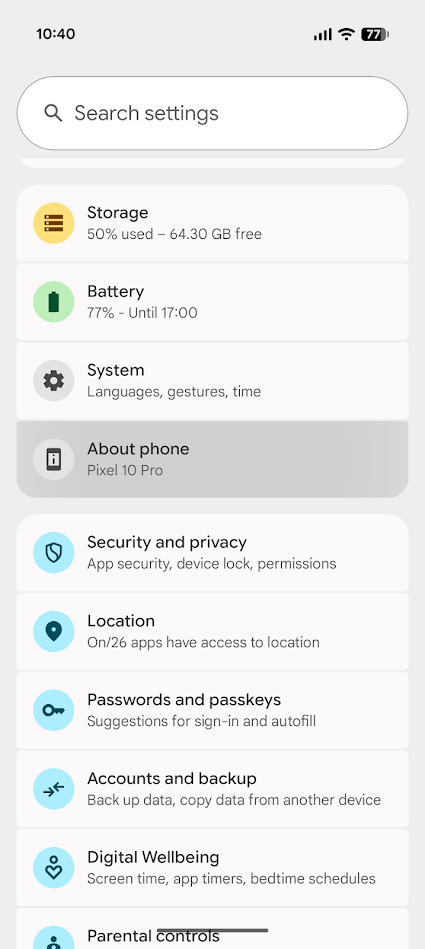 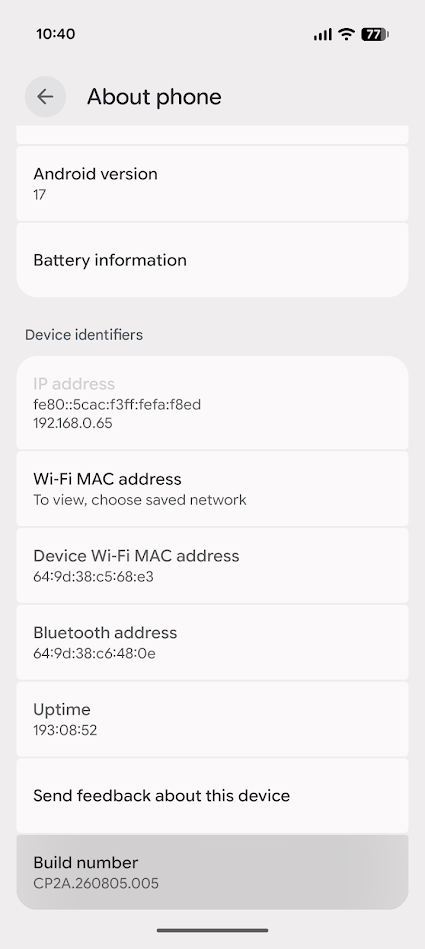
You'll find the developer options in the System sub-menu of the Settings app. Now that it's enabled, we can dive into my favorite developer settings to change.
As Android becomes increasingly bloated, I've become obsessed with finding ways to counteract the worst of its excesses.
Whether that's by saving 7GB of space by disabling one preinstalled app, or freeing up 2GB of RAM, I'm constantly finding ways to improve my phone's performance.
To achieve the latter, I always disable background processes on Android. While some notifications arrive more slowly as a result, the overall performance boost is worth it.
Open **Developer options** .
Scroll down and tap **Background process limit** .
Select **No background processes** from the pop-up window.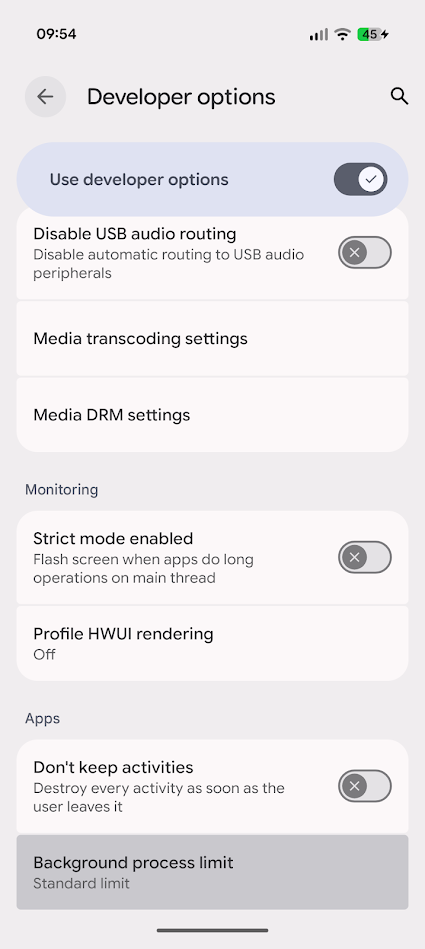 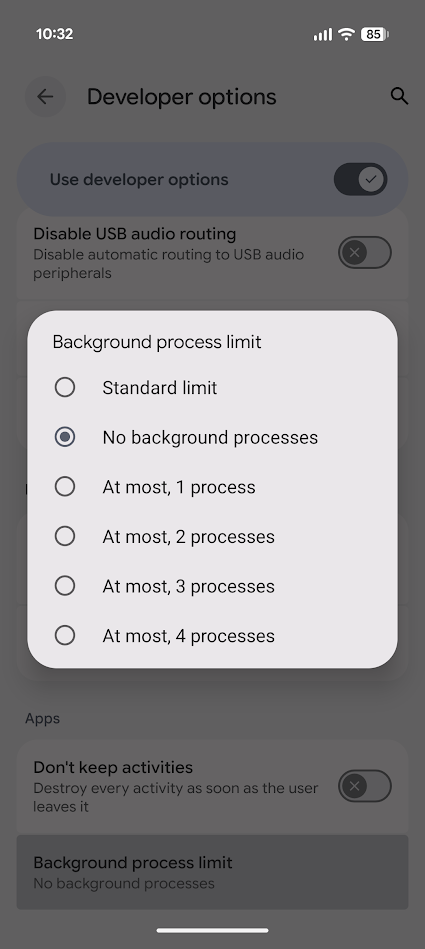
USB debugging lets me issue commands and retrieve files from my Android phone via a USB connection. It functions as a fail-safe if I can't interact with my Android phone. It doesn't impact performance and takes seconds to set up.
Open **Developer options** .
Scroll down and toggle on the **USB debugging** switch.
Toggle on the **Disable adb authorization timeout** switch.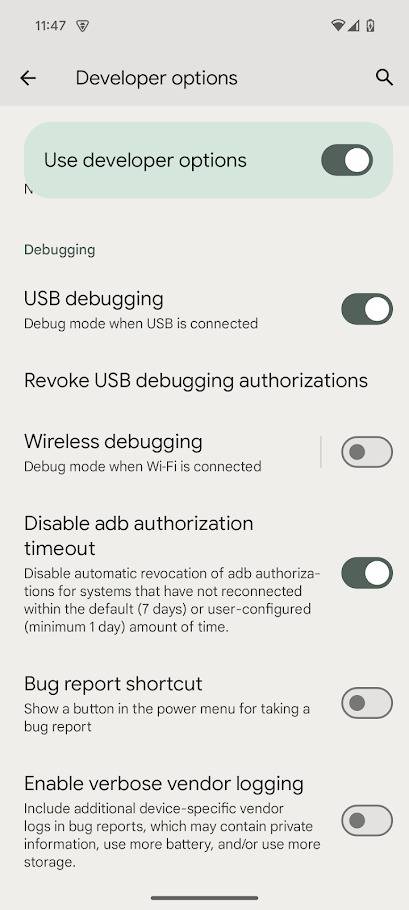 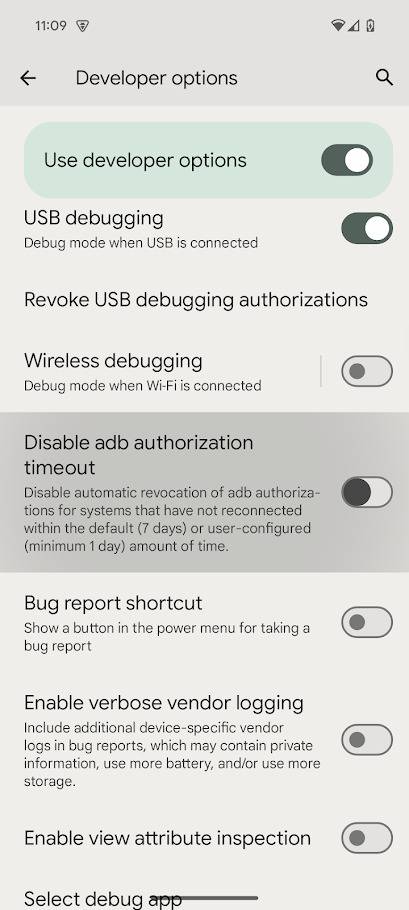
Next, I plug my phone into my computer and approve the connection. By following step 3, I don't need to re-authorize the connection each time, which is crucial if I can't interact with my phone.
No matter how powerful an Android phone I use, actions like opening apps are limited by animation speeds. Whether I'm using a budget Samsung Galaxy A-Series or a Google Pixel Pro phone, this setting makes my phones feel twice as fast.
Open **Developer options** .
Scroll down and tap **Transition animation scale** .
Select **Animation scale .5x**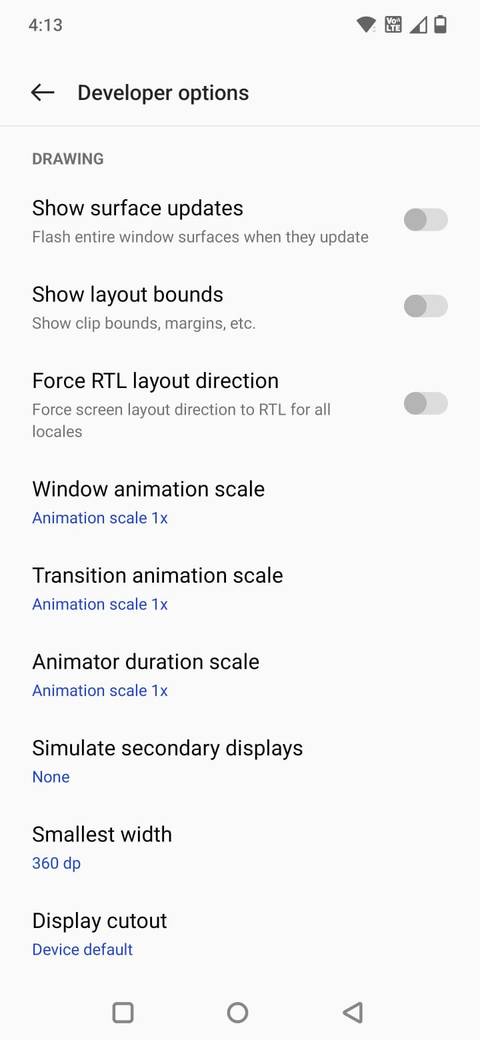 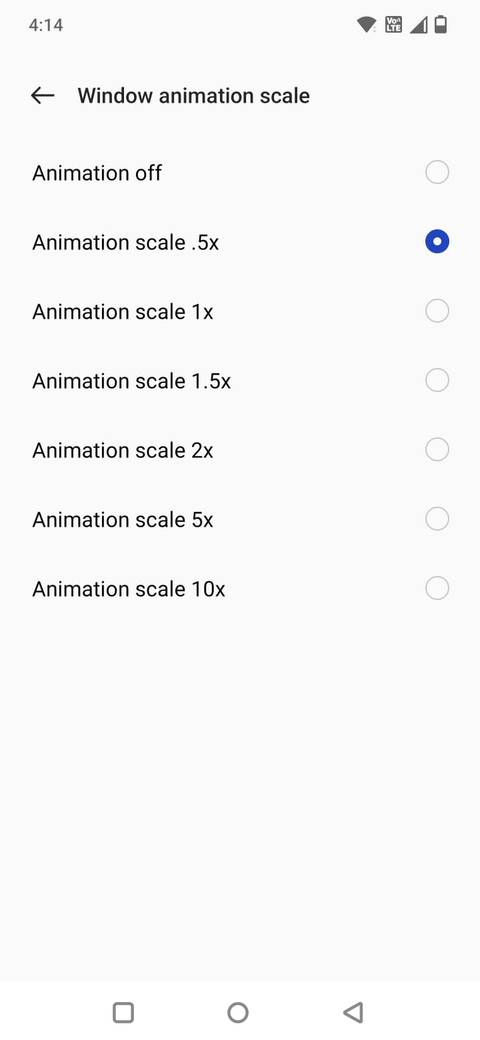
While this setting doesn't make my phones run faster, the visual trickery makes it feel like it does.
Unlike the other settings I enable, I disable memory profiling after a few weeks. I use it to monitor my phone's performance as I install and use new apps; it identifies which apps are using the most memory.
Open **Developer options** .
Scroll down and tap **Memory** .
Toggle on **Enable memory usage profiling** .
Select **1 day** from the drop-down menu.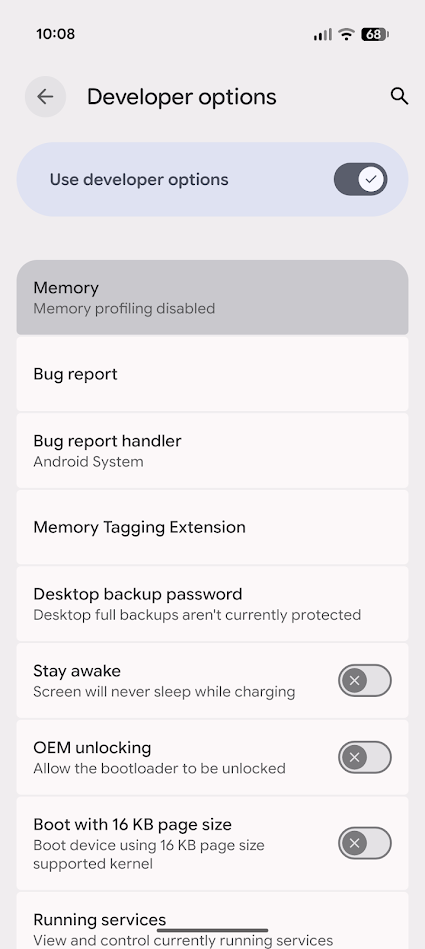 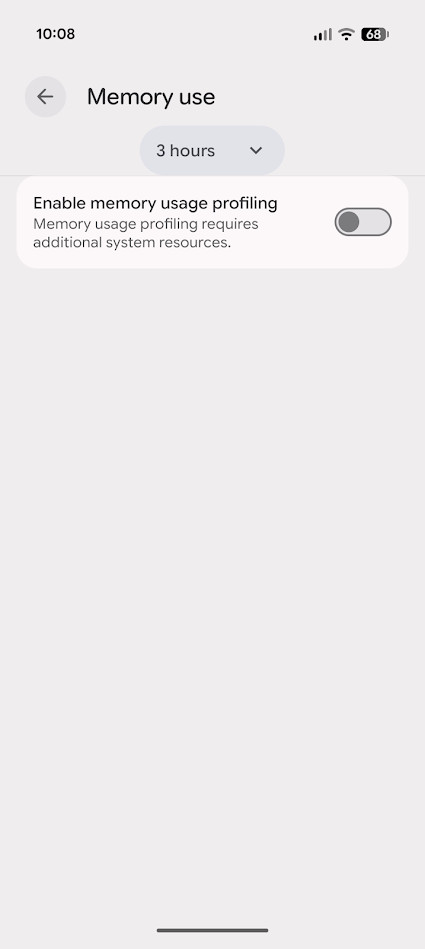
This setting requires a restart, but it's invaluable for tracking my phone's performance as I start using it and identifying problems before I forget about them.
While I use a pair of Pixel Buds Pro 2 as my regular earbuds, I'm constantly trying out and testing new pairs. But when each pair of Bluetooth earbuds or headphones has different maximum volume levels, songs sound different each time.
Disabling absolute volume lets me adjust my phone and earbud volume separately, allowing for greater utility and higher volume.
Open **Developer options** .
Scroll down and tap **Bluetooth** .
Toggle on the **Disable absolute volume** switch.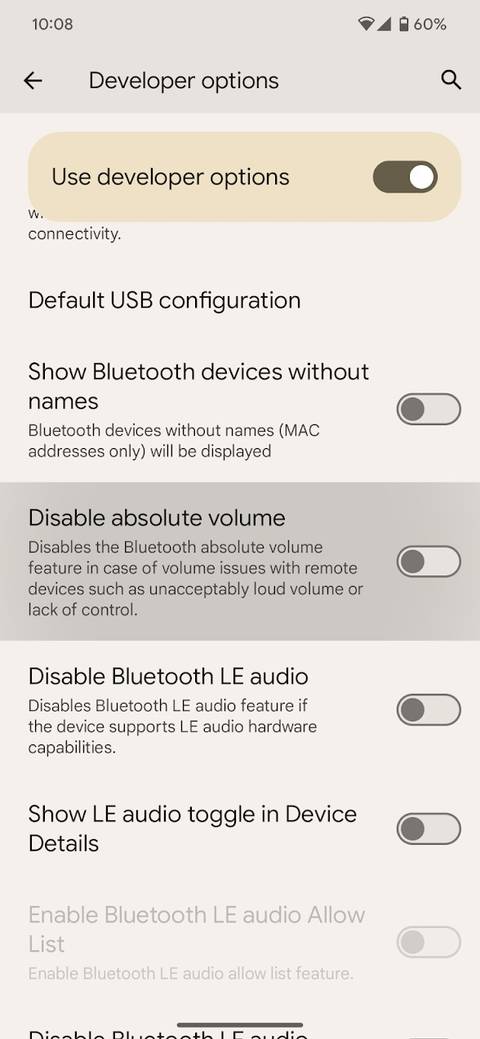 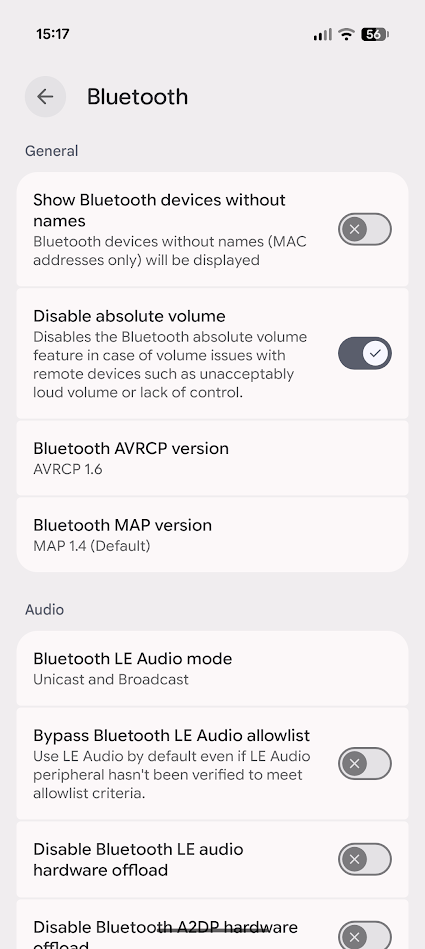
I change this setting on any Android phone I use that has a variable refresh rate capped at 120Hz or higher. To save battery, Android adjusts the refresh rate to keep things smooth, but I like to have the best visuals at all times.
Paired with the animation speed changes described earlier, this setting makes any phone feel faster than I think it can. It does drain the battery faster, so I disable it for long journeys.
Open **Developer options** .
Scroll down and toggle on the **Force peak refresh rate** switch.
I don't touch 90% of the developer options on any phone. Most are only relevant for developers, so toggling them brings me absolutely no benefit.
However, the other 10% are useful settings that let me use my phone how I want with little or no drawbacks. There are many more to be found than those I listed here, but these have the biggest impact.
Original article: https://www.androidpolice.com/after-enabling-these-six-developer-settings-my-phone-feels-twice-as-fast/ Source: Android Police