Android Police — Android — Sat, 29 Aug 2026 11:00:10 GMT
Summary
The article argues that the Pixel 11's most important feature is its repairability, which received little attention at Google's August Made by Google keynote compared to Gemini and the Tensor G6. Every Pixel 11 model carries an EU repairability grade of Class B, driven by EU ecodesign rules that took effect in June 2025 requiring design for disassembly, batteries retaining at least 80% capacity after 800 charge cycles, and seven years of spare parts availability. The author contends that seven years of OS updates only matter if the hardware survives, noting that lithium-ion batteries typically degrade after 400 to 500 charge cycles, and that Google's iFixit partnership provides genuine parts and manuals—with historical Pixel pricing of $40 to $60 for battery kits and $120 to $260 for screens. On the US PIRG Education Fund's 2026 "Failing the Fix" scorecard, Google earned a C-, behind Motorola's B+ but ahead of Samsung's D and Apple's D-. The piece concludes that buyers planning to keep the phone for seven years should budget for a battery replacement around year three or four.
Gemini and Tensor G6 took up nearly the whole August Made by Google keynote. Which is a shame.
There's a spec in the Google Pixel 11 that every one of those Gemini features needs to keep running in 2033, and it never came up.
Seven years of OS updates sounds fantastic. It reads well on a spec sheet and buys some peace of mind, up until the battery swells or the screen cracks.
Have fun asking Gemini for help through a spiderweb of broken glass. The good news is the Pixel 11 is built for exactly that day.
Every Pixel 11 model carries an official EU repairability grade of Class B. I believe the engineering that keeps it there is one of the most important things about these phones.
Before we hand Google a medal, the EU deserves a word here. None of this happened because Google woke up feeling generous.
The EU ecodesign rules for smartphones took full legal effect in June 2025, and they set the floor the Pixel 11 is standing on.
They force manufacturers to design for disassembly, and every model carries a repairability grade printed where a buyer can see it.
Let's thank them twice, because the same rules went after the battery. A cell has to hold at least 80% of its original capacity after 800 full charge cycles, which is roughly double what the industry was bothering to test for.
No phone battery survives seven years of updates, and we have already made that case.
Lithium-ion cells are subject to chemistry, and capacity loss starts to show around 400 to 500 charge cycles.
Also factor in a charging port that wears loose and at least one cracked screen over 84 months.
You can see where this is going. Baby the battery all you want, the day still arrives when something physical has to come out and something new has to go in.
The only variable left is how hard the phone makes that. A phone that makes it easy is a phone you'll still be using in 2033.
Being easy to open counts for nothing if there's nothing to put back in. Thankfully, the EU regulations I mentioned also require manufacturers to supply critical spare parts for seven years after a device leaves the market.
Through the ongoing iFixit partnership, owners can get genuine parts plus official step-by-step manuals.
Pixel 11 parts pricing will move as inventory settles, so here's the historical picture instead. Battery kits for recent Pixels have gone for $40 to $60.
Screens are the expensive part, with OEM display kits between $120 and $260 depending on the model.
There are two ways to score repairability, and Google looks different under each one.
The 2026 Failing the Fix scorecard from the US PIRG Education Fund takes the EU repair scores of 105 phones, averages them by brand, and adjusts for each company's Right to Repair record.
| Manufacturer | 2026 "Failing the Fix" grade |
|---|---|
| Motorola | B+ |
| C- | |
| Samsung | D |
| Apple | D- |
Google took a C-, behind Motorola's B+ but comfortably ahead of Samsung's D and Apple's D-.
Its phones score poorly on the EU's method, which weights how hard a device is to pull apart. On policy, almost nobody's hands are clean.
Eight of the ten brands PIRG examined belong to trade groups that lobby against Right to Repair, Google included, though Google clawed its deduction back by supporting Washington's repair law.
If you plan to hold Google for the full seven years, budget for it. Expect a battery replacement somewhere around year three or four.
A $50 DIY kit around year three rescues a phone that lives on the charger and makes it worth carrying out the door again.
The Pixel 11's best feature is letting you run that plan without throwing stones in the way, and I'm still a bit annoyed it never earned a slide.
**Brand**
**SoC**
**Display**
**RAM**
**Storage**
**Battery**
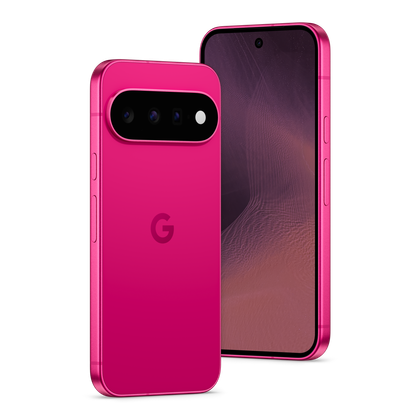
With the new HiLight feature, a new array of colors, and more, the Pixel 11 is set to be the next great flagship.
Original article: https://www.androidpolice.com/pixel-11-best-spec-skipped/ Source: Android Police