PinkNews — LGBTQ+ — Fri, 28 Aug 2026 13:24:23 +0000
Summary
The 2025 Australian animated film Lesbian Space Princess has faced accusations of transphobia on queer social media, centered on its use of the labrys—a double-headed axe long associated with lesbians but in recent years adopted by gender-critical groups—and a scene in which Blade, a drag queen character, tries to steal protagonist Saira's axe and is decapitated. Critics argue the labrys, possibly summoned from Saira's uterus, symbolizes girlhood that Blade is depicted as "stealing." Co-creator Emma Hough Hobbs said the symbol was included after careful debate because "it should belong to all lesbians, including trans lesbians," and that positive representation of inclusion was considered more powerful. Others have pushed back, noting that Blade is not a trans woman and that one of Saira's lesbian mothers, a trans woman, can summon the labrys, with some accusing critics of contributing to "queer harassment." The film is available to rent or buy on UK streaming services.
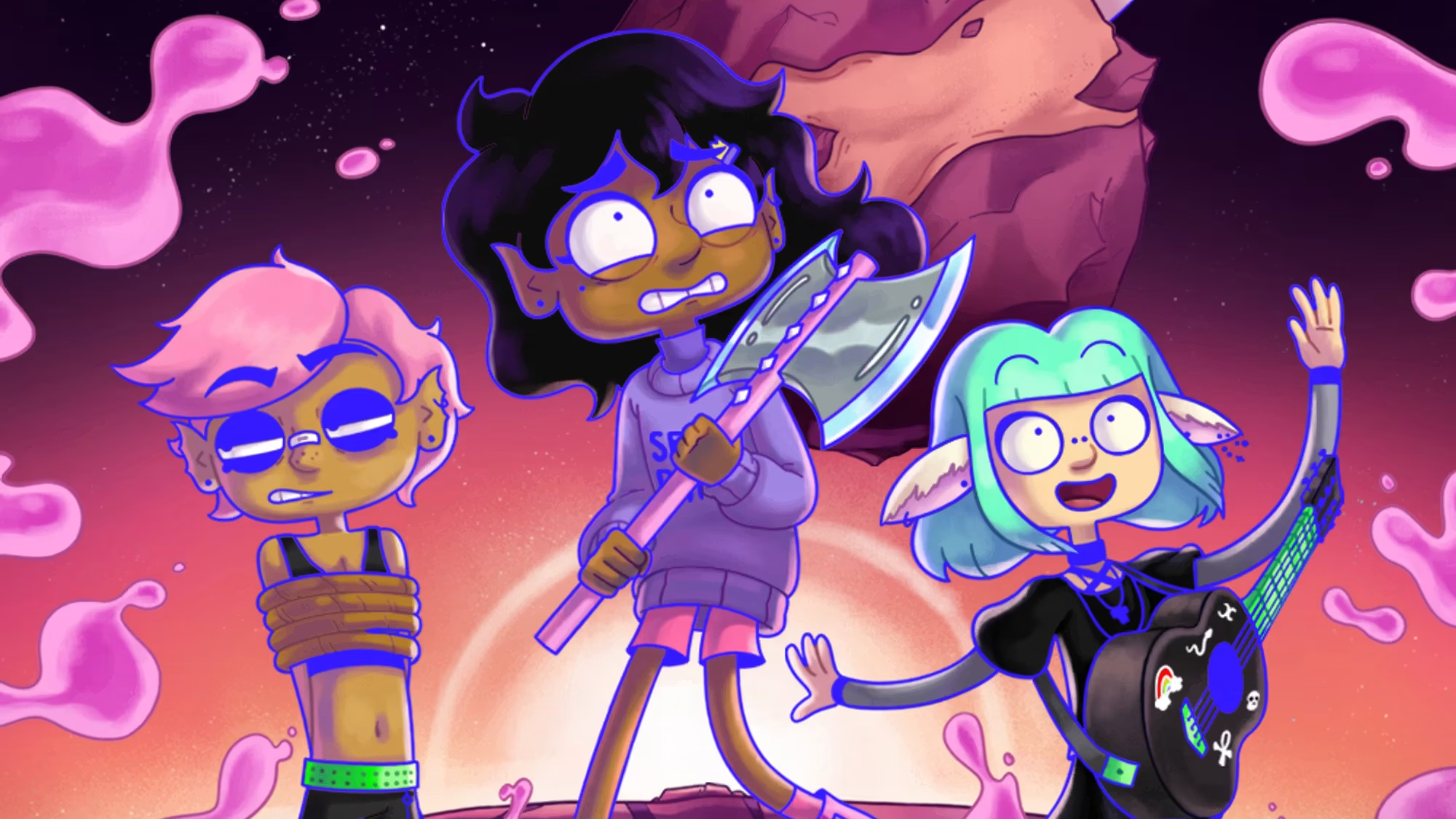
Lesbian Space Princess (Umbrella Entertainment)
Animated movie Lesbian Space Princess has been a major talking point on queer social media recently, with accusations it features transphobic themes.
The 2025 Australian film sees protagonist princess Saira living on the planet Clitopolis. Her ex Kiki is kidnapped by “Straight White Maliens” who want to use her as bait to steal Saira’s axe – or labrys. Some fans believe Saira summons the labrys from her uterus.
Later, another character – Blade, a drag queen who cannot summon the axe – tries to steal the labrys, before being decapitated, as per Them.
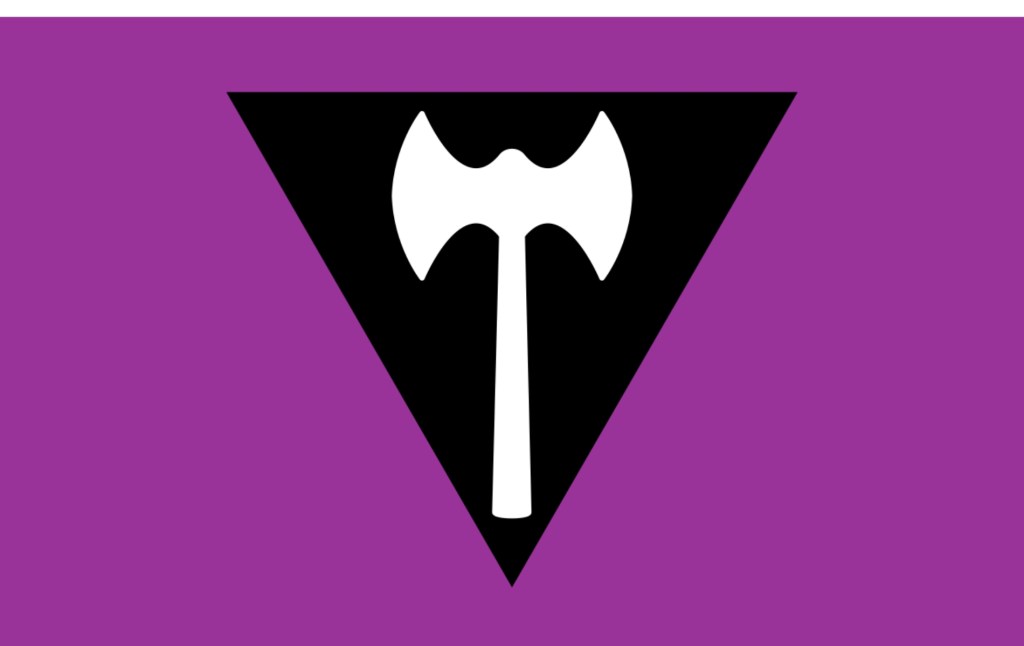
The labrys – a double-headed axe – has had a long association with lesbians, with the community even having a Labrys Pride Flag. It is a solid violet flag, with an upside down black triangle and white labrys over it.
It was created in 1999, bringing in a number of references.
The labrys represents feminine strength and is linked to Greek mythological figures the Amazons, a group of female warrios.
The violet colour is associated with Sappho, the Greek poet, who is believed to have been a lesbian.
The inverted triangle is thought to reference the Nazi “asocial” badge, which represented the persecution of lesbians during the Holocaust.
While the Labrys Pride Flag didn’t see as much mainstream usage as other flags from the community, in recent years it has been used by gender-critical lesbians.
Because of that, a trans-inclusive Labrys Flag was created, which also includes the Trans Pride Flag’s blue, pink and white colours.
On top of that, some viewers believe the scene with Blade is particularly transphobic. A Bluesky user wrote it is “very very explicitly transphobic especially since one of the characters is seen as ‘stealing’ the girlhood of the main character, represented by the axe”.
Film co-creator Emma Hough Hobbs said in a 2025 interview with Joy Sauce that the use of the labrys had been carefully considered. “It used to be a TERF symbol and we debated included it. In the end, we put it in the film because it should belong to all lesbians, including trans lesbians … We felt the positive representation of inclusion was more powerful.”
Among the discourse, however, are people pointing out that Blade is not a trans woman. Secondly, one of Saira’s lesbian mothers, who is a trans woman, can summon the labrys.
“You guys aren’t pushing for better representation,” one person said on X. “You’re just contributing to queer harassment.”
Lesbian Space Princess is available to rent or buy on streaming services in the UK, so you can watch and make up your own mind.
Share your thoughts! Let us know in the comments below, and remember to keep the conversation respectful.
Original article: https://www.thepinknews.com/2026/08/28/lesbian-space-princess-trans-transphobia-labrys/ Source: PinkNews