
Queerty — LGBTQ+ — Sat, 29 Aug 2026 01:00:00 +0000
Summary
London, the feature directorial debut of Brazilian writer-director duo Victor Di Marco and Márcio Picoli, is set to premiere in the Venice Film Festival's Critics' Week sidebar. Di Marco, who is disabled himself, stars as the title character, a young queer disabled man who works as a dom performer at a fetish club and, after a new imaging test promises to define his diagnosis, debates whether to let the results guide his life or continue living on his own terms. The filmmakers say the project grew out of frustration with on-screen depictions that infantilize disabled people or portray them as needing to be "fixed," and they struggled to secure financing because backers deemed the film too "risky" and too much of a niche "disability story." Since 2020, Di Marco and Picoli have made four short films that collectively earned around 30 awards at international film festivals.
As summer comes to an end, we’re approaching every queer cinephile’s favorite time of the year: fall festival season!
In the coming weeks, some pretty major movies will be making their premieres at buzzy film fests all over the globe, like Toronto, Telluride, and Venice. And while many of these titles are already hotly tipped for Oscars glory, there are plenty more discoveries to be made from all over the world, films that challenge & excite us, opening our eyes to new perspectives rarely seen on screen.
How about we take this to the next level?
One such film is London which, contrary to what its title might make you think, hails from Brazil, and is the feature debut of award-winning, writer-director duo Victor Di Marco and Márcio Picoli.
Di Marco himself stars as the eponymous London, a young, disabled person who makes a living as a dom performer at a fetish club in the city. He’s never felt defined by his disability, living a life like so many other young queer people—hanging with friends, dancing the night away—but it does leave him with plenty of questions:
“I never know why people look at me,” he says at one point. “[Is it] because they think I’m handsome or ridiculous?”
But when London’s finally presented with an opportunity to gets some answers in the form of a new imaging test that could define his diagnosis, he worries it will “reduce his identity to a clinical label.” Once handed the results, he’s at a crossroads: should he let them guide his life moving forward, or continue living on his own terms.
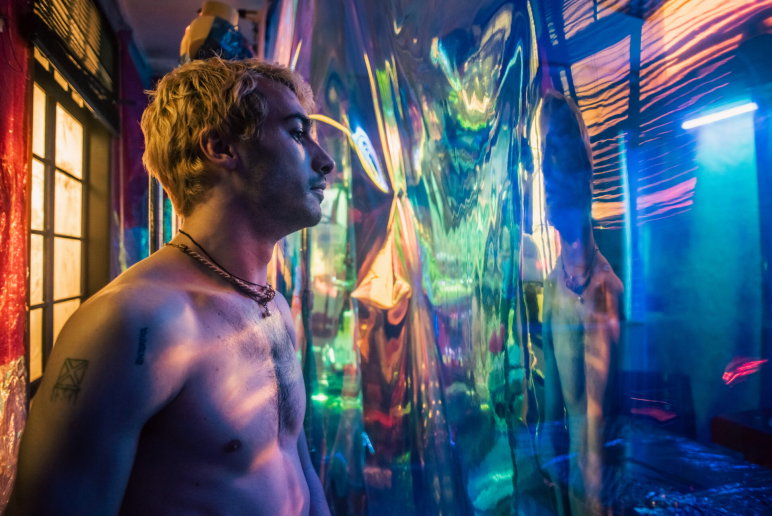
For the filmmaking pair, London was borne out of frustration and the understanding that, oftentimes when disabled individuals are depicted on screen, they’re either infantilized or shown to be in need of “fixing.”
“This is something that has always bothered us,” Picoli recently shared with Variety. “We began building this character from this discomfort, with London seeing his disability as a positive and being someone who wants to understand his body while being afraid of being reduced to a diagnosis.”
Di Marco himself is disabled, so through his committed, vulnerable performance, we get to see this firsthand. He understands his disability as “a particular kind of intelligence” with a physical language all its own, which he’s beautifully translated to the screen. London not only gets to be sexy and own his body, but—through his job in sex work—”own” other’s bodies too, for pleasure, for pain, or whatever they want.
## Related*

While disappointing, it’s perhaps not surprising to learn that London had a difficult time finding backing to get made. Despite its filmmakers track record (since 2020, they’ve made four shorts that have collectively earned of 30 awards at international film festivals) and the fact that they describe this story as a “classic melodrama,” they were repeatedly told no, that the film was too “risky” to find an audience.
What’s more, they’ve heard several people try to box it in as a “disability story” that was too niche to find a wider audience. But in sharing the film with the world, Di Marco & Marcio Picoli what to dispel that notion, instead showing audiences its universality:
“Disabled bodies are the bodies of the future,” Di Marco told Variety. “If everything goes well in our lives and we get to live until we’re old, we will all face some level of disability. Accessibility is something that concerns all of us.”
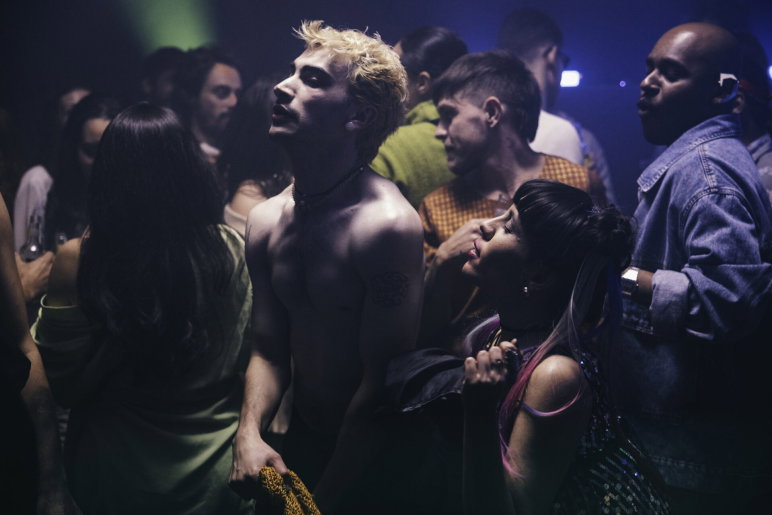
He continued: “I want to cause a friction in the audience. I want them to think: this could happen to me. I, too, can be confronted by a diagnosis I may or may not wish to face. What kind of desires and pleasures would I find in such a complicated place? Desire is a very open thing; it is uncontrollable, it doesn’t respond to how we might want to label it. London is, in a way, a love letter to the world and a way of asking for more courage out of us to embrace our desires and silence our ghosts and our fears.”
London is set to debut early next month in the Venice Film Festival’s Critics’ Week sidebar, intent on re-framing the way we look at our bodies and disabilities—and just maybe it’ll liberate some minds when it comes to sexuality & identity, too!
So let’s hope Venice is just the beginning for London, because this is a story that deserves to be seen all over the world.
Stay tuned for more updates on when you might be able to see London for yourself, and check out a brief teaser trailer below:
## Related*

Original article: https://www.queerty.com/a-worker-doms-the-narrative-around-disabled-bodies-in-this-bold-brazilian-drama-20260828/ Source: Queerty