restauranttechnologynews.com — Discovery (discovered via Tech) — Fri, 28 Aug 2026 13:53:46 GMT
Summary
Owner has raised $240 million in Series D funding at a $2.3 billion valuation, led by Growth Equity at Goldman Sachs Alternatives with participation from Meritech, Redpoint, Headline and Jack Altman, more than doubling its $1 billion valuation from May 2025. The company is positioning itself as an "AI CMO and CTO" for independent restaurants, expanding beyond websites and direct online ordering into POS, CRM, AI phone ordering, customer support and automated marketing execution. Owner reports surpassing $100 million in annual recurring revenue, with restaurants expected to generate more than $1 billion in sales through the platform this year and more than 100 million U.S. consumers having used its technology. The company faces competition from players including Toast (approximately 171,000 locations), Square (over 450,000 food and beverage businesses), SpotOn, Clover, Olo, ChowNow, Popmenu and AI specialist SoundHound, most of which are also adding AI capabilities to their platforms. Owner says it plans to expand internationally and eventually extend its model to salons, spas, independent grocers and other local businesses.
By Lea Mira, RTN staff member - 8.28.2026
Owner has raised $240 million in a Series D financing that values the restaurant technology company at $2.3 billion, giving it substantially more capital to pursue an ambitious goal: becoming the technology and marketing platform that effectively runs the digital side of an independent restaurant. Growth Equity at Goldman Sachs Alternatives led the financing, with existing investors Meritech, Redpoint, Headline and Jack Altman also participating. The new round comes about 15 months after Owner raised $120 million at a $1 billion valuation, meaning the company has more than doubled its valuation since May 2025.
The size of the investment is notable, but the more consequential part of the announcement is what Owner is becoming. The company started by helping independent restaurants build better websites, generate direct online orders and reduce their dependence on third-party marketplaces. It is now positioning itself as what it calls an “AI CMO and CTO” that can manage websites, online ordering, mobile apps, CRM, customer support, POS and AI phone ordering from a single platform.
The idea is that restaurant owners should increasingly be able to tell the system what they want accomplished instead of operating each piece of software themselves. If an owner wants to promote a menu item, for example, Owner says its agents can create the promotion, update the website, generate the creative, build the campaign and publish it. The same system can answer phone calls, take orders, respond to reviews and emails and handle customer support.
That moves Owner beyond the familiar all-in-one restaurant software pitch. For years, vendors have competed by adding more applications to their platforms and connecting POS, online ordering, loyalty, marketing and guest data. Owner is betting that the next phase will be defined by software that actively operates those applications for the restaurant.
There is already substantial evidence that the model has found a market. Owner says it has surpassed $100 million in annual recurring revenue and that independent restaurants will generate more than $1 billion in sales through the platform this year. The company also says more than 100 million U.S. consumers have used its technology and that it now powers more U.S. locations than either Domino’s or Taco Bell. Those figures are company-reported.
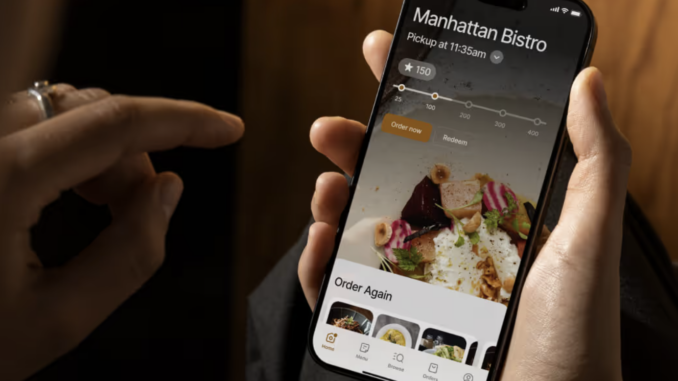
Owner also reports that restaurants increase online traffic by an average of 40% within 30 days of launching and grow direct online revenue by more than 40% during their first year. According to the company, customers who use a restaurant’s branded app reorder at twice the rate of customers who do not use the app.
The direct-ordering economics behind those numbers have helped create a crowded competitive field. ChowNow, for example, says it works with more than 20,000 independent restaurants and combines commission-free direct ordering, branded apps, marketing, customer data and restaurant discovery. Its proposition overlaps considerably with the part of Owner’s business focused on helping independent operators acquire customers directly and keep the resulting customer relationships for themselves.
Popmenu competes from an equally important direction. Its platform combines restaurant websites, online ordering, reputation management, loyalty and marketing, while its AI marketing tools can create location-specific email, SMS and social campaigns and assemble monthly marketing calendars. Restaurants can review the material before it is published or establish guardrails that allow campaigns to go out automatically.
The competitive pressure becomes considerably greater as Owner moves into POS and other core operating systems. At that point, it is no longer competing primarily against digital-ordering and restaurant-marketing specialists. It is moving directly toward companies that already sit at the center of restaurant operations.
Toast is the most obvious example. The company served approximately 171,000 locations as of March 31, 2026, and already connects POS, payments, digital ordering, guest data, loyalty, marketing and numerous operational functions. Toast is also pushing quickly into the same AI-assisted territory Owner is targeting.
Toast IQ Grow combines an AI Marketing Agent with restaurant customer data, advertising, digital storefront tools and human marketing support. The agent can help identify opportunities, create campaigns and execute a restaurant’s marketing calendar, while Toast Advertising extends that activity into Google, Facebook and Instagram. Toast says restaurants using Toast IQ Grow have generated an average sales increase of more than 8% compared with similar Toast restaurants.
The difference is where each company starts. Toast already controls the transaction, payments and much of the restaurant’s operational data and is building intelligence on top of that foundation. Owner established itself around customer acquisition, websites and direct digital revenue and is now expanding deeper into the operating stack.
Square creates a similar challenge, especially in the small-business segment Owner is pursuing. Square says more than 450,000 food and beverage businesses use its technology, and its restaurant platform already brings together POS, online ordering, delivery integrations, loyalty, marketing, payroll and other functions.
Square is also becoming much more aggressive with AI. Square AI allows restaurant operators to query their own business and local market data conversationally, while its restaurant products are adding AI-powered voice ordering. The company is simultaneously connecting merchants to consumer AI platforms, including ChatGPT, Claude and Google’s Ask Maps, so restaurants can be discovered and, in supported experiences, receive orders directly from AI conversations.
SpotOn is another significant competitor among independent restaurants. Its stack includes POS, online ordering, websites, loyalty, reservations and marketing, with automated campaigns built into its restaurant platform. SpotOn has also added AI tools for tasks such as menu creation and modification, illustrating how quickly AI is moving from standalone restaurant applications into the core POS ecosystem.
Clover is approaching the opportunity from yet another direction. Fiserv has progressively connected Clover and BentoBox into a broader hospitality platform spanning POS, payments, websites, ordering, reservations and marketing. Clover Hospitality by BentoBox is specifically designed to bring the restaurant’s digital storefront and its on-premise operating system together, while Fiserv continues to broaden Clover’s restaurant capabilities through partnerships and acquisitions.
For larger restaurant companies, Olo remains an important part of the landscape. Olo says its platform supports more than 800 brands across approximately 90,000 locations and connects online ordering, payments, delivery, catering, loyalty, marketing and guest data. Its customer base skews toward larger multi-location brands, making the overlap with Owner less direct today, but both companies are competing for control of first-party restaurant commerce and the customer data generated through it.
There is also a second layer of competition coming from specialized AI companies. SoundHound AI, for example, is extending its restaurant voice ordering technology into broader agentic AI through its OASYS platform, with agents designed to handle guest interactions and operational tasks across front-of-house and back-of-house environments. Similar specialists are attacking individual restaurant workflows that Owner would prefer to incorporate into its broader platform.
This leaves restaurant operators with two increasingly different approaches to AI. They can assemble specialized products for voice ordering, marketing, analytics, customer service and other functions, or they can put more of the restaurant into one platform and allow that platform’s AI to coordinate the work.
Owner is making a large bet on the second model. The argument is especially compelling for independent restaurants because they generally do not have corporate marketing departments, data teams or technology staffs to manage an expanding collection of systems.
That may ultimately be Owner’s most important advantage. The company is not primarily asking an independent restaurant owner to become better at using technology. It is promising that the technology will do more of the work itself.
The same approach also creates risk. As Owner expands into POS and other mission-critical restaurant functions, it enters categories where uptime, payments, hardware, integrations, implementation and support matter as much as the intelligence of the software. Toast, Square, Clover and SpotOn already have large installed bases and control enormous amounts of transaction and operational data that can be used to make their own AI products more capable.
Owner will also have to demonstrate that combining more functions into one AI-driven platform produces better outcomes than choosing specialized providers. Restaurants have spent years moving toward integrated technology stacks, but many operators still resist handing too much of their business to one vendor.
The competitive question is therefore becoming less about which company has the longest feature list. What matters is which platform has enough data to understand what is happening inside a restaurant, enough control of the technology stack to act on that information and enough intelligence to improve results without creating more work for the operator.
Owner’s new funding gives it considerably more resources to compete on all three fronts. The company says it plans to expand internationally and eventually take the same model into salons, spas, independent grocers and other local businesses, but restaurants remain its proving ground.
“The world is racing to build AI to replace people’s jobs. Owner is building AI to do the opposite: to do the jobs many small business owners have never been able to afford,” co-founder and CEO Adam Guild said in announcing the financing. He argues that the technology can give independent restaurants capabilities that were previously available primarily to large chains.
The $2.3 billion valuation suggests investors believe there is considerable value in that proposition. More broadly, the round is another sign that the center of competition in restaurant technology is changing. The next fight is unlikely to be simply over who provides the restaurant’s website, ordering system, marketing software or POS. It is increasingly about which company can make all of those systems work together and then use AI to run more of them on the operator’s behalf.
Original article: https://restauranttechnologynews.com/2026/08/owner-raises-240-million-to-expand-its-ai-powered-technology-and-marketing-platform-for-restaurants/ Source: restauranttechnologynews.com (discovery)