Queerty — LGBTQ+ — Sat, 29 Aug 2026 17:00:00 +0000
Summary
This article, part of a queer film retrospective column timed to the theatrical release of Coyote Vs. Acme—the Looney Tunes film acquired by Ketchup Entertainment after Warner Bros. shelved it in 2023 for a tax write-off—examines Bugs Bunny's status as a queer icon. The piece argues that Bugs, who debuted in Tex Avery's 1940 short A Wild Hare and has starred in more than 150 shorts, resonates with queer audiences through his defiance of authority, wit, and joyful demeanor. It highlights his long history of cross-dressing, beginning with a prototype character in the 1939 short Hare-um, Scare-um and including turns as a ballerina in A Corny Concerto (1943) and Viking opera diva Brünnhilde in What's Opera, Doc? (1957). The article contends that Bugs' gender-bending was always framed so that his adversaries, not Bugs himself, were the butt of the joke, presenting his drag as an act of courage and authenticity. It also notes that classic Bugs Bunny cartoons are currently streaming for free on Tubi.
Welcome back to our queer film retrospective, “A Gay Old Time.” In this week’s column, with the nearly shelved forever Coyote Vs. Acme in theaters, we’re shifting the column ever-so-slightly for a broader look at the enduring queer appeal of Looney Tunes mainstay Bugs Bunny.
This weekend, the hugely anticipated and infamously delayed Looney Tunes live-action movie Coyote Vs. Acme is finally hitting theaters. When it was being shelved by Warner Bros. in the fall of 2023 to receive a tax write-off and most likely never be seen by audiences, the film was acquired by the small distribution company Ketchup Entertainment after a wave of backlash against Warner, and huge grassroots support from the film community.
Your dose of fabulosi-TEA
To celebrate its release (and to urge readers to go see this in theaters if you are able to!), this week we’ll do something a little different with our column. Rather than focusing on a single film to look back on, this week is all about honoring the original “Looney Tune” and one of the greatest cultural figures in entertainment history. Because if there is one thing about thee Bugs Bunny, it’s that he’s an undeniable queer icon.
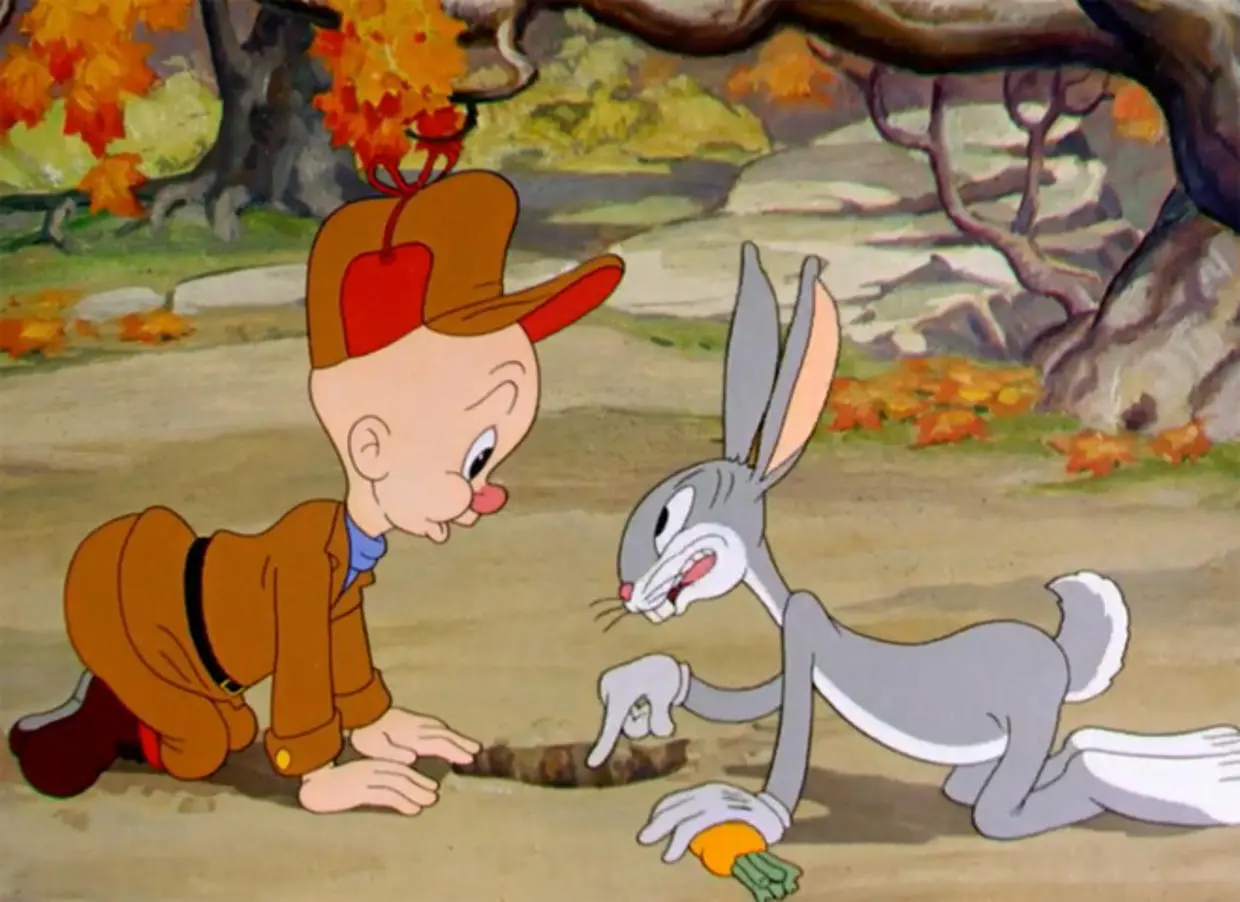
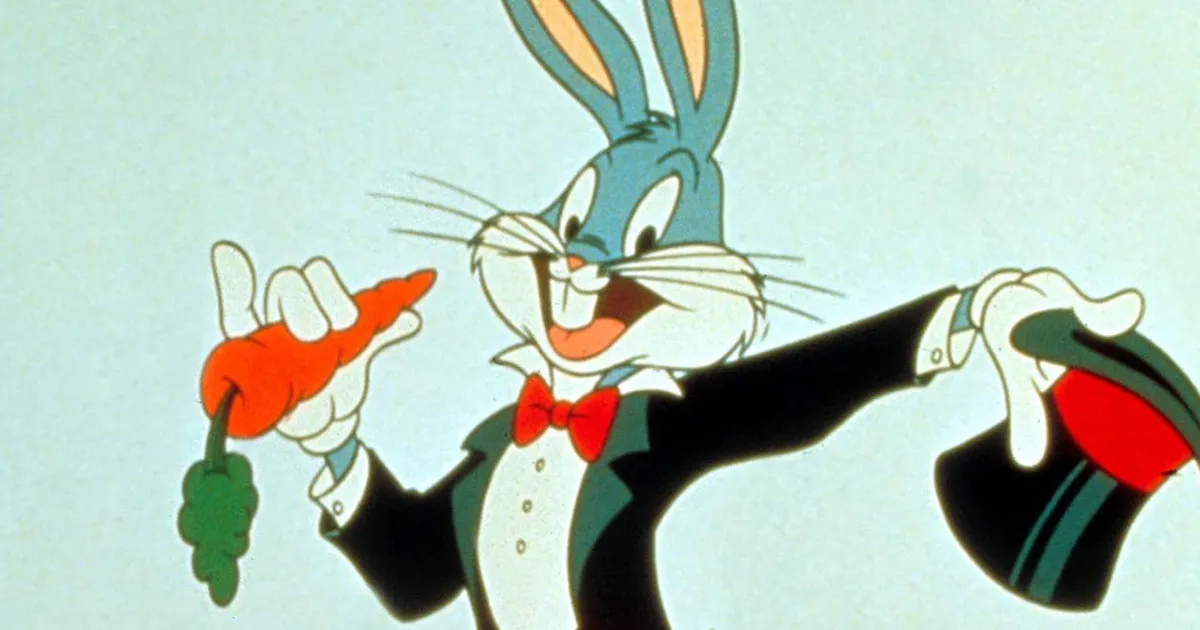
Bugs Bunny made his first official appearance in the animated short film A Wild Hare in 1940, created by Tex Avery, the renowned animator behind most of the iconic Warner Bros. cartoons like Daffy Duck, Porky Pig and Elmer Fudd. With his iconic trickster demeanor and “What’s up, doc?” catchphrase, Bugs is one of the most recognizable cartoons worldwide, starring in more than 150 short films—more than any other animated character. Much like his Disney counterpart Mickey Mouse, he became the mascot for Warner Bros. animation as the head of their Looney Tunes menagerie of characters.
But ask any queer person, and they will probably be able to tell you that there’s something oddly relatable and familiar about Bugs Bunny. Like we can see something of ourselves reflected in him.
Maybe it’s his shameless defiance of authority, always going against those that are trying to bring him down (which in his case usually means hunt him down with a comically large rifle), and not just evading them, but doing it with an amount of cleverness, wit and mockery that is incredibly satisfying to watch. Maybe there’s a part of us that wishes we could stand up to those that try to suppress us with the same amount of ingenuity.
Maybe it’s the joie de vivre with which he always seems to be moving through life. Bugs Bunny is not an angry rabbit. He is not a depressed rabbit. He is a gay rabbit—in the literal definition of the word—that is always minding his own business. Even when an obstacle is set in front of him (whether that is a hunter with a big hat, a Western sheriff with a bigger hat, or a large paintbrush with reality-altering properties, just to name a few) he takes on the challenge with glee. He relishes in outsmarting them, in deceiving them, and in defeating them.
Maybe there’s a part of us as a community that has been taught to dim ourselves down for the comfort of straight society that wants to find satisfaction in conflict and confrontation the way he does.
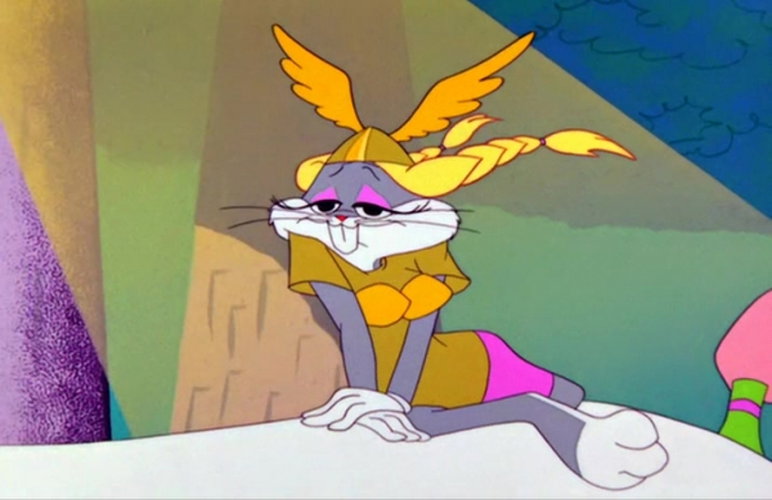
But let’s be real. Bugs Bunny is a queer icon because of the cross-dressing. Because of his uncanny ability to gender bend and slip into another identity as quickly and as easily as he pleases. Because he’s not afraid to put on lipstick, a pair of eyelashes, a dress, and flirt his way to the top. Bugs Bunny is not just a drag queen; he’s one of the greatest to ever do it.
Bugs’ history with cross-dressing goes back to the very origins. Even before he was officially known as Bugs Bunny, a prototype of his character appeared in the 1939 short film Hare-um, Scare-um, in which he disguised himself as female to trick a hunting dog off his trail. In his more than eighty-year career, Bugs has worn female attire dozens of times, usually as a way to evade someone who’s after him, but always fully embodying the disguise without hesitattion.
He’s dressed himself in women’s lingerie (The Wabbit Who Came To Supper, 1942), as a ballerina (A Corny Concerto, 1943), a mermaid (Hare Ribbin’, 1944), a can-can dancer (Stage Door Cartoon, 1945), a Southern belle (Mississippi Hare, 1948), a flirty Eskimo woman (Frigid Hare, 1949), an eloping bride (Hare Trimmed, 1953), and perhaps most famously, Viking opera diva Brünnhilde (What’s Opera, Doc?, 1957).
These are just a handful of many examples that don’t even take into account the times in which he slips into more traditionally feminine mannerisms (one may even call them heavily queer-coded) to flirt, seduce, or tease his opponent, all of which buy the ruse unequivocally, falling head over heels with him/ her in the process.
There’s an ease to Bugs’ gender-bending that feels natural and without judgment. Although certainly played for laughs by the animators when the cartoons were first made, they always made it clear the hunters were the butt of the joke, not the charismatic rabbit slipping into a dress. He’s the hero we are rooting for. His actions and behaviors—which one imagines might’ve been condemned or censored had they been in live action—are instead openly celebrated.
Of course, that’s what many of us wish for in our own lives, and that Bugs Bunny embodies most strongly for us: That becoming someone closer to what we feel like inside, or straying outside the gender binary, is not met with opposition or chastising. Rather it’s celebrated as an act of courage and authenticity.
These feelings were probably too tangled or complex for many of us to realize the first time we encountered a Bugs Bunny cartoon. But he is one of the few cultural figures that’s been a staple for all generations. And it’s comforting to know that, time and time again, there have been and continue to be members of our community that see themselves in a conniving cartoon rabbit that likes to put on a dress.
Many classic Looney Tunes cartoons with Bugs Bunyn are currently streaming for free on Tubi.
## Related*
Original article: https://www.queerty.com/why-bugs-bunny-endures-as-a-queer-icon-one-of-historys-great-drag-queens-20260829/ Source: Queerty